
An HMO licence is not a certificate that the property is fine. It is a permission with conditions attached, and the conditions are where most landlords come unstuck, because they are checked after the fact.
Here is what a London council actually looks at, in the order it tends to matter.
Room sizes: the national floor
Since October 2018 there has been a national minimum space standard applied through mandatory HMO licence conditions in England.
- 6.51 square metres for one person aged over 10.
- 10.22 square metres for two people aged over 10.
- 4.64 square metres for a child under 10.
A room below the relevant figure cannot lawfully be used as sleeping accommodation for that number of people. If you already hold a licence and a room is below standard, the condition is usually drafted to require a plan to fix it rather than immediate closure, but it has to be fixed.
Many London boroughs also apply higher local standards, and some will not licence a new HMO where every room sits at the bare national minimum. Check the borough’s published standards before you buy, because a room of 7 square metres in one borough is not the same proposition as 7 square metres somewhere with stricter rules.
Amenities: bathrooms, kitchens, storage
The 2006 management regulations set out what shared amenities must be provided and kept in good repair. Councils turn that into numbers, and the numbers vary, but you will recognise the pattern.
- Bathroom and WC provision sized to the occupants, commonly one bathroom per five people with an additional WC above that.
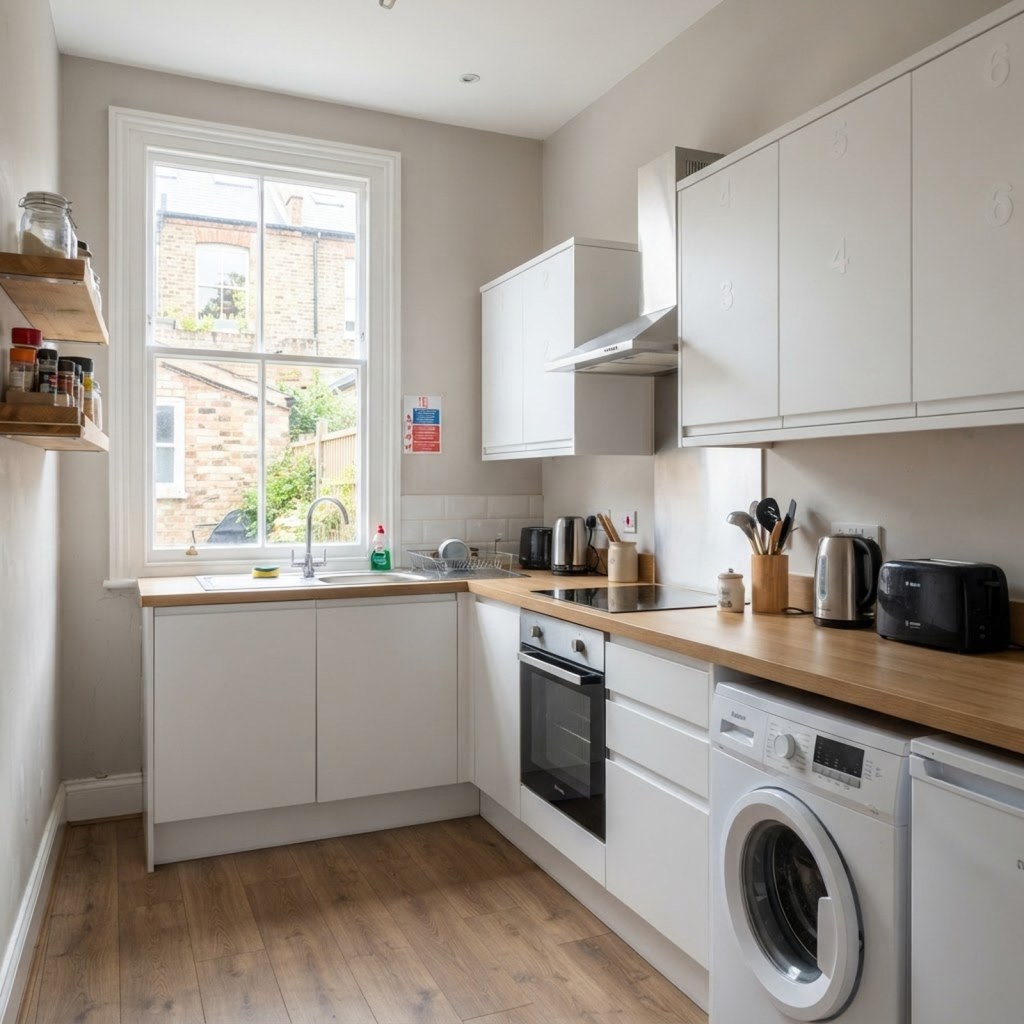
- A kitchen with enough sink, cooking and food storage capacity for the number of households, not the number of people.
- Individual food storage, because shared cupboards cause more disputes than anything else in a shared house.
- Waste storage that matches the occupancy, including bins the council will actually collect.
The detail that catches people out is that all of this is assessed against the number of occupants the licence allows, not the number you intend to put in.
Fire safety
This is the part that gets councils excited, and rightly. Requirements scale with the building, but the core is consistent.
- Fire detection to the grade and category the property needs, maintained, tested and recorded.
- Fire doors on habitable rooms and the escape route where required, with intumescent strips and closers that actually work.
- A protected escape route, kept clear, with nothing stored on it.
- Emergency lighting where the escape route needs it.
- A written fire risk assessment, reviewed, not a template downloaded once.
Guidance moves. The current national housing fire safety guidance replaced the older LACORS document, and the London Fire Brigade publishes its own expectations for HMOs. Your licensing officer will tell you which standard they assess against, and they would rather answer that before you refurbish than after.
The safety paperwork
- Gas safety certificate, annual, for every appliance.
- Electrical Installation Condition Report, every five years, plus visual checks.
- Portable appliance testing for anything you supply.
- Legionella risk assessment, with the control measures actually carried out.
- Smoke and carbon monoxide alarms tested and recorded.
Records matter as much as the kit. A council inspecting an HMO is looking for evidence that you are managing it, not just that someone once installed an alarm.
Management and the fit and proper person test
A licence is granted to a person, and that person has to be fit and proper. Relevant convictions, breaches of housing law, or a record of ignoring council requests will end an application. Unspent offences can be declared and argued, not hidden.
You also need to show how the house is managed day to day. Who takes the calls, how repairs are reported, how often common parts are inspected, how anti-social behaviour is handled. A management statement is a document, but it is also a description of how you actually intend to run the place.
The five things that most often go wrong
- Buying a room count the council will not licence, because the rooms measure 10 square metres by the seller’s tape and 8 by the officer’s.
- Refurbishing to the standard of the borough the seller bought in, not the borough the property is in.
- Underestimating the cost of fire doors, detection and a protected stair.
- Assuming the licence transfers with the property. It does not.
- Failing to declare a relevant conviction on the application, which is worse than the conviction.
This is general information, not legal advice. Licensing conditions and local standards differ by borough and change. Read the licensing process in checking licensing before you exchange, the wider model in the HMO guide, or see how I work with a property.


Leave a Reply